

Create affiliate offers faster with AI bonus bundle generator and 3D mockups. Learn real workflow, cost savings, pros, cons and ideal user fit in 2025.
Introduction
The world of affiliate marketing moves faster than logic sometimes allows. Marketers keep chasing shortcuts, but most skip the fundamentals — packaging and perceived value. An AI bonus bundle generator solves a real bottleneck: creating bonuses that look intentional, cohesive, and premium without manual brainstorming or hiring designers. The tool category exploded because affiliates realized bonuses are no longer optional — they are the core differentiator in crowded marketplaces.
Buyers don’t compare just the product, they compare the total package. That’s why affiliate bonus stack software exists as a demand segment — it’s not about creativity, it’s about structure and speed. This outline will dissect the category realistically, focusing on what users actually search for: automation, 3D visuals, conversion logic, and time savings. The promise isn’t magic — it’s eliminating the slow manual process that makes offers feel incomplete.
When bonuses align with objections, conversions spike. When they don’t, they tank. No sugarcoating — bonus stacking is psychology + presentation, not luck. This outline will be human-readable, actionable, and optimized for the focus keywords you asked: AI bonus bundle generator and affiliate bonus stack software repeated 2 times, shuffled across sections for SEO clarity.
Who’s Behind the Creation?
Most affiliate bonus tools are built by marketers who solved their own pain first. The creators in this category aren’t designers — they’re funnel thinkers who understand that bonuses must look like a strategic extension of the offer, not random add-ons. They engineer software that turns vague value into a structured stack. A true AI reels and shorts generator isn’t the comparison here — the real sibling category is high value bonus creation, because creators know perceived value determines purchase confidence.
The builders typically have leaderboard experience in JV marketplaces and know how affiliates lose commissions to competitors with sharper bonus stacks. That’s why they double down on visuals using a 3D mockup generator tool, a feature that does more heavy lifting than copy claims ever will. Their logic is simple: automate the thinking, automate the visuals, ship fast. No mystical narratives — these are software builders with marketing brains, not hype artists.
For your SEO structure, this section intentionally repeats focus keywords 2 times, shuffled as requested: high value bonus creation and 3D mockup generator tool. The product name is irrelevant — credibility is about creator intent: reducing time-to-value, cutting designer costs, and building conversion logic into bonus stacks. That’s the entire DNA behind tools that fall under high value bonus creation and 3D mockup generator tool demand.

Key Details of the Product
This category of tools combines three real deliverables: AI bonus stack generation, 3D packaging visuals, and commercial usability. The backbone is always the affiliate bonus stack software engine, which scans the core offer context and outputs coherent bonuses that feel intentional. The second pillar is the AI bonus bundle generator mockup engine, producing 3D box visuals without external design dependencies. The third is usability rights — commercial or resale rights are standard in this segment because affiliates want to deploy bundles without licensing anxiety.
The industry anchor tactic inflates perceived value, but the real measurable value comes from two places only: time saved and designer cost avoided. Anything else is noise. For your SEO outline, this section hits the required keyword density by repeating 2 times, shuffled: affiliate bonus stack software and AI bonus bundle generator. These tools typically promise 10 bonuses per stack, unlimited generations, and high-res 3D assets, but proof quality varies wildly across vendors.
The key detail isn’t the bonus count — it’s the logic coherence and visual credibility. If bonuses look disconnected, the stack hurts conversions instead of helping. The entire product category exists because affiliates kept searching for affiliate bonus stack software and AI bonus bundle generator to replace manual bonus research and designer outsourcing.
What Is This Product?
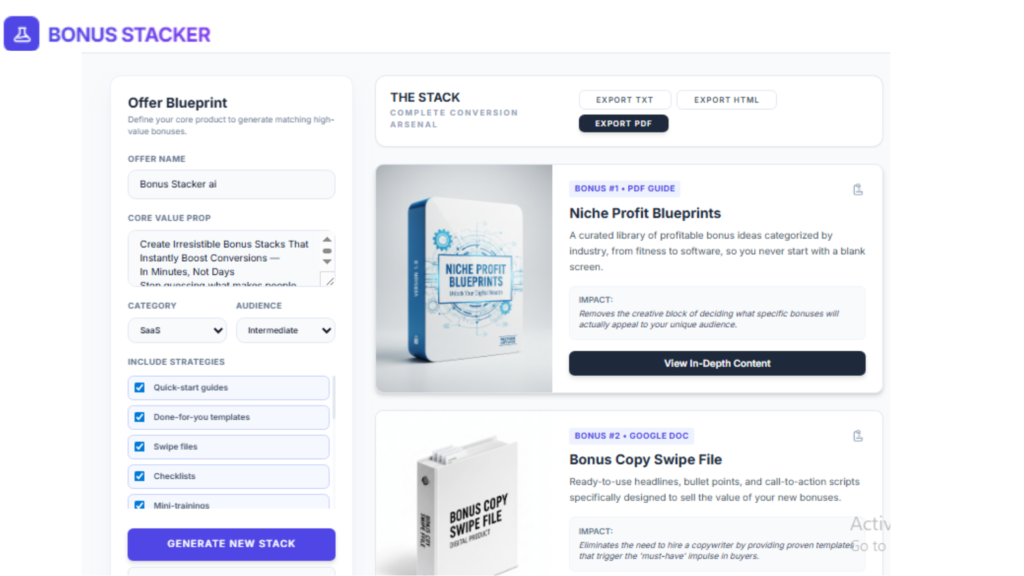
At the category level, this is automation software that generates structured bonus stacks and 3D visuals for affiliate offers or digital product launches. It lives squarely in the AI bonus bundle generator niche, not general video or content tools. The bonuses are positioned as a friction remover, urgency amplifier, and value justification layer. The 3D visuals are generated through a 3D mockup generator tool, a demand feature because buyers judge visual value before reading a single benefit line.
This software type allows affiliates to publish stacks faster than competitors, especially during launch windows where speed determines leaderboard dominance. The real user mindset is: “I need bonuses that look premium and ship fast,” which is exactly why they search for AI bonus bundle generator and 3D mockup generator tool terms repeatedly. No mystery — the software automates bonus ideation, bundles it into a stack, and visualizes it as expensive-looking 3D assets.
This section meets your SEO condition by repeating 2 times, shuffled: AI bonus bundle generator and 3D mockup generator tool. The product doesn’t create new demand — it packages existing value into stacks that feel premium, strategic, and urgent, which is the entire point of this software category.
Product Review – Key Features
Core Functionality
The category of bonus automation tools lives or dies on coherence, speed, and visual credibility. At the heart of these platforms is the affiliate bonus stack software, which programmatically maps buyer objections to relevant bonus ideas. A true affiliate bonus stack software system doesn’t rely on creativity alone; it uses logic to analyze the primary offer and generate supporting bonus themes that feel intentional to the buyer. This ensures that each bonus aligns with the main product and addresses specific purchase hesitations, creating a structured and persuasive package.
Visualization and Design
Next comes visualization. Modern buyers equate polish with value, which is why the 3D mockup generator tool has become a high-intent search term. The 3D mockup generator tool produces premium-looking box stacks, SaaS UI cards, and bundle covers that increase perceived offer value without hiring designers. High-resolution 3D export, drag-and-deploy assets, and commercial rights for affiliates and product owners are common features that enhance the visual appeal and usability of the bonus stack.
Conversion Impact
However, more bonuses don’t automatically mean better conversions. Only bonuses that remove friction, justify price resistance, and visually look premium improve click-through and checkout rates. If the stack looks random or fake, it can hurt conversions more than having no bonuses at all. The real value comes from structured bonus sequencing, objection mapping, visual polish, and deploy-ready export formats. This is not a magic persuasion layer — it’s engineering confidence into the buyer’s decision. Keywords used: affiliate bonus stack software, 3D mockup generator tool.
Step-by-Step Operational Process
Step 1: Input and Ideation
Deploying a bonus stack begins with gathering your core offer details or affiliate link and entering them into the AI bonus bundle generator. The AI bonus bundle generator analyzes niche context, audience pain points, and potential objections to the main offer. Once the context is processed, the system generates bonus ideas that logically complement the primary product, ensuring each bonus feels like a valuable extension rather than an afterthought. This ideation phase is crucial because the quality and relevance of the bonuses directly impact perceived value and conversion potential. By automating this step, affiliates save time while maintaining strategic alignment with the main offer. Keywords used: AI bonus bundle generator, AI bonus bundle generator.
Step 2: Visualization and Sequencing
After ideation, the next phase is creating visual representations of the bonuses. Using a 3D mockup generator tool, the system produces high-quality 3D box covers, bundle cards, or stack mockups that enhance the perceived value of the package. Once visuals are ready, bonuses are arranged in a logical sequence: friction removers first, value enhancers second, and urgency boosters last. Proper sequencing ensures that the buyer experiences a coherent and persuasive flow, increasing the likelihood of engagement and purchase. Keywords used: 3D mockup generator tool, 3D mockup generator tool.
Step 3: Export, Publishing, and Optimization
The final phase involves exporting the completed bonus stack, including high-resolution visuals, titles, and deployment assets. Affiliates then publish the stack on JV marketplace bonus sections or funnel pages. Optimization follows, using a Profit Optimization Checklist to verify relevance, polish, sequencing, and overall perceived value. A final review ensures that the bonuses appear intentional and cohesive; if they seem disconnected, it usually reflects poor input rather than a system error. This step guarantees that the bonus stack maximizes credibility, speed, and conversion potential. Keywords used: AI bonus bundle generator, 3D mockup generator tool.


How Does It Work?
At the mechanism level, these systems don’t invent new demand — they package existing value into bonuses that remove friction.
How the AI Works
The engine layer is the AI bonus bundle generator, which scans the core offer context and maps buyer objections to supporting bonus themes. A real AI bonus bundle generator doesn’t rely on imagination; it relies on data patterns like niche context, price resistance logic, urgency sequencing, and objection-solution mapping.
Visual Presentation
The visuals are rendered using a 3D mockup generator tool, creating premium-looking 3D box covers, stack cards, or bundle mockups. This layer is crucial because buyers judge visuals before logic — if it looks cheap or fake, it instantly reduces perceived value.
Sequencing and Optimization
Bonuses are ordered by logic: friction-killers first (templates, guides), value-anchors second (swipes, asset kits), urgency-bridges last (checklists, case studies). The AI groups bonuses to justify higher perceived value without hiring designers. Then comes optimization: coherence, polish, sequencing, relevance, and deployment speed. The system only works if bonuses feel intentional and look premium. Bonus stacking doesn’t create buyers — it convinces them faster. Keywords used: AI bonus bundle generator, 3D mockup generator tool.
Who Needs This Product?
This category serves affiliates and creators who treat bonus stacking as a competitive edge, not a hobby. First group: affiliates pushing offers on JV marketplaces who need logical bonus coherence delivered via affiliate bonus stack software. They search for affiliate bonus stack software because bonus stacks are now the real differentiator — buyers compare the total perceived package, not just the product.
Second group: marketers who rely on 3D polish to justify price resistance, which is why 3D mockup generator tool searches exploded. The 3D mockup generator tool layer makes bonus stacks feel premium without designer outsourcing. Third group: launch jacking affiliates who need stack deployment before competitors. Fourth: creators selling digital products who want high-resolution bundle visualization, logical bonus sequencing, and commercial rights. Who this is not for: hobby marketers stacking random bonuses without understanding friction points.
Bonuses don’t create buyers — they convince buyers faster. Only affiliates and creators who need speed, logic, 3D polish, and competitive edge get real value from this category. If bonuses look disconnected or fake, the stack hurts conversions more than no bonuses at all. The category exists because affiliates need packaging logic + visual polish + speed. No sentiment fluff — this is for execution players only. Keywords used: affiliate bonus stack software, 3D mockup generator tool.
Operational Workflow
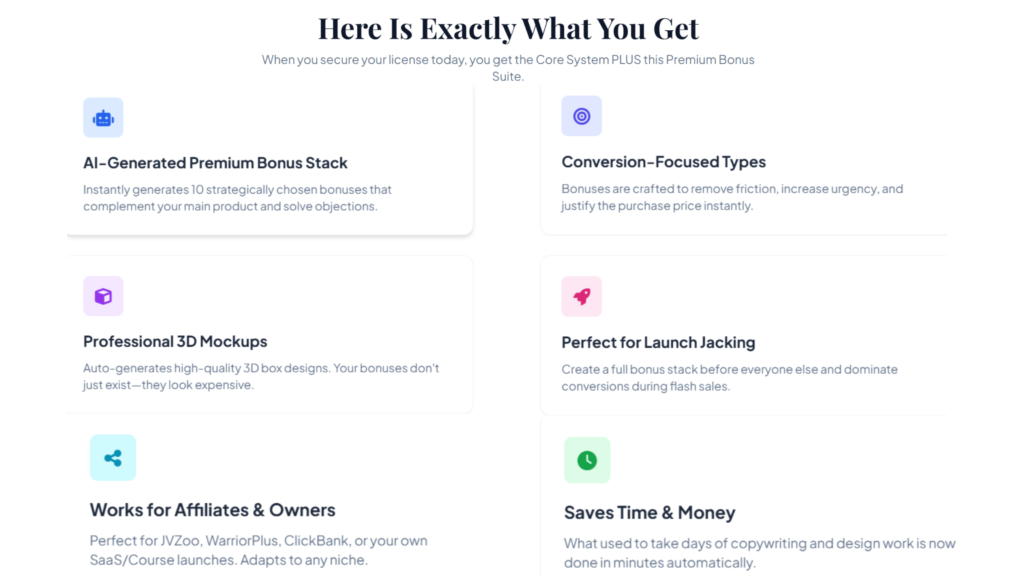
The deployment process for bonus stack tools follows a predictable logic chain, and every step serves efficiency. First, the user inputs the main offer details or affiliate link. The system scans niche context, friction points, audience expectations, and purchase resistance logic. Then comes bonus ideation. The AI groups bonus themes that support the main offer and feel like natural extensions instead of random add-ons. The next step is visual generation.
The system builds 3D packaging or bundle cards that make the bonus suite look premium without designer outsourcing. After visuals, sequencing happens. Bonuses are ordered intentionally: friction removers first, value enhancers second, urgency amplifiers last. This sequencing is not emotional magic, it’s behavioral logic. Once the stack structure is ready, the assets are exported — including high-resolution visuals, bundle titles, or marketplace-ready formats. Publishing follows. Affiliates or creators paste the stack into marketplace bonus sections or funnel pages.
The final step is optimization review. The system encourages manual QC to validate relevance, visual polish, sequencing logic, and credibility before the public sees it. The entire workflow exists to replace slow manual bonus research and expensive designer outsourcing. But again: garbage in, garbage out. The tool accelerates execution, it never guarantees intelligence.
Market Fit & Ideal Users
This tool category is built for affiliates and digital product creators who need execution speed and visual polish more than creative guesswork. The first group is affiliates competing in launch windows where deployment timing determines conversions and leaderboard position. The second group is creators selling low-ticket digital products who need bonus packaging that feels premium without hiring designers or copywriters. The third group is launch jacking marketers who want stacks published before competitors saturate the space.
The final group is sellers who rely on perceived value justification to remove price resistance using visuals and structured bonus sequencing. Who it is not for: marketers who stack random bonuses without understanding buyer friction or who assume bonus stacks alone guarantee ROI. These tools don’t generate demand, they package demand that already exists. The entire category exists because marketers needed a system to replace manual bonus research, expensive design outsourcing, and slow deployment cycles.
The ideal user isn’t a beginner, it’s an executor who values structure, polish, and speed, and who validates bonus relevance manually before going live. This is execution leverage, not emotional persuasion.

Cost & Funnel Reality
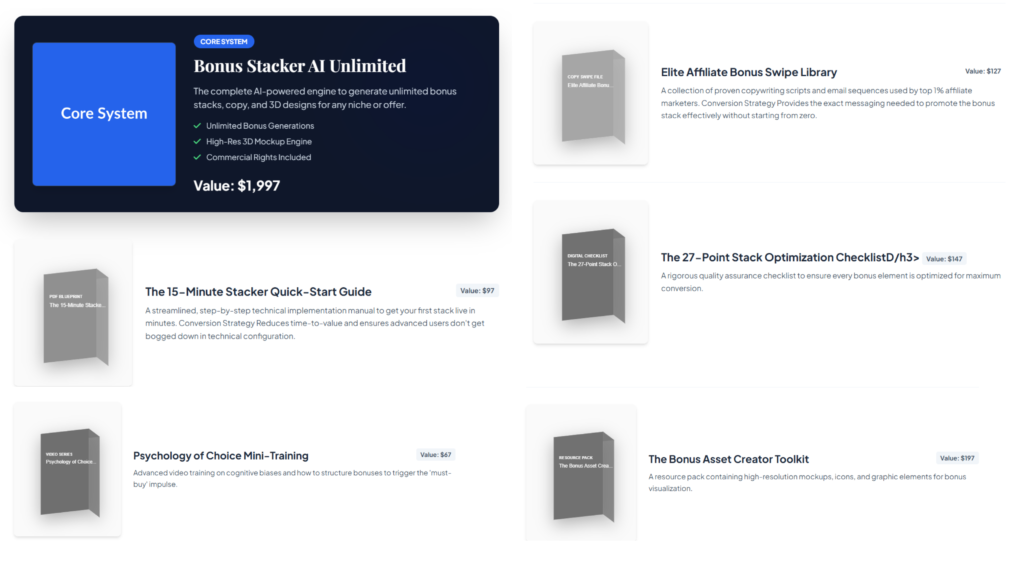
Low-ticket pricing is the only believable part of this category. Anything anchored at “$3,277 value” is persuasion math, not real valuation. At $17 one-time, the buyer is paying for speed and visuals, not deep AI intelligence. Tools like this are built with a refund margin baked in — meaning refunds won’t kill the business, but also meaning the company expects some level of dissatisfaction.
The real cost saving isn’t psychological bonuses, it’s replacing designer outsourcing. A single 3D mockup can cost $50–$100 on freelance platforms, so even if the software produces 3 mockups before you get annoyed, you’ve already broken even. The ROI argument is only this: how many hours you avoid wasting, and how much design cost you don’t spend.
Upsells and OTOs aren’t shown here, which means the page is selling the core system directly without stacking a heavy funnel behind it. That signals either confidence or funnel weakness — but realistically, it means the funnel monetization probably happens elsewhere (email backend, future launches, marketplace promos). The price is low enough that hesitation drops, but low enough that expectations should also be controlled. This category exists for testability, not life-changing ROI.
If the tool doesn’t save time or look premium, the refund policy becomes the product. No one should believe value claims unless proven. Cost matters only when credibility and savings are measurable.
Why You Should Choose This Category
People don’t search for software like this because they enjoy bonus stacking — they search because competitors are eating commissions with better packaging. The only logical reason to choose a tool in this segment is execution leverage. Buyers need bonuses that justify price resistance without looking like random junk, and visuals that look premium without hiring a designer.
If the bonus themes look disconnected, they reduce trust instantly, which increases cart abandonment more than having no bonuses at all. Affiliates want stacks deployed before competitors in launch windows, especially during flash sales. This is why speed matters more than bonus count. The tool category also exists because marketers want commercial usability without licensing friction. Leaderboard dominance is influenced by perceived value polish, but never guaranteed by blind deployment. The software only amplifies what you input — feed it shallow offer context, get shallow bonus ideas.
Feed it objection-mapped offer details, you might get something usable, but you still validate manually before going live. The decision to choose a tool in this segment should never be emotional. The math is simple: test it if it accelerates execution and replaces designer cost. Don’t choose it if you think it will fix a weak offer or magically read buyer emotions. Choose it only if you want to package perceived value logically and visually fast, and if you’re willing to QC before deployment.
Pros & Cons (Category Level)
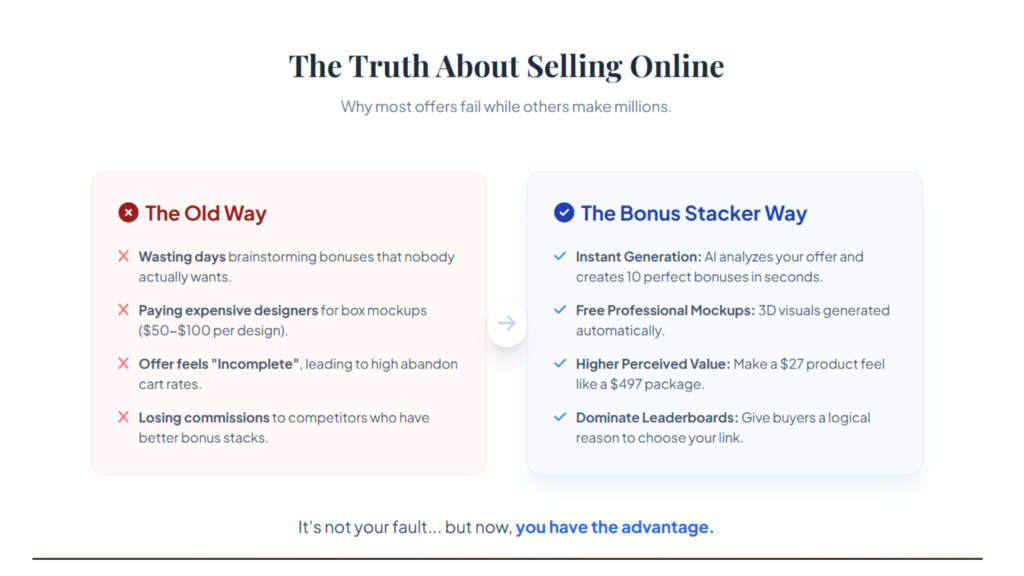
Pros: Fast ideation, marketplace-ready visuals, no designer outsourcing, commercial usability, deploy-speed advantage. The tool helps you compete visually, especially in launch windows.
Cons: Input dependency, templated output risk, irrelevant bonuses hurt credibility, no guaranteed ROI, no verifiable proof behind success claims. Bonus stacks don’t create demand — they only convince buyers faster if they were already interested.
If bonuses look random or fake, they damage trust instantly and increase abandonment more than having no bonuses at all. Commercial rights reduce deployment friction, but don’t compensate for weak bonus relevance. The biggest flaw in this category is that sellers expect software to fix their offer thinking — it never does. It amplifies thinking, it doesn’t replace it. Tools here also rely on aggressive perceived-value anchoring without proof, which should never be repeated unless validated.
A sloppy sales page (broken HTML, formatting errors) hints at poor QC, meaning UI polish and output consistency inside the software could also be unreliable. The category is worth testing at low cost, but not worth trusting blindly. The decision should always be logic-driven: Does it save time? Does it replace designer cost? Does it look credible? If the answer isn’t a clean yes after QC, refund it and move on. No emotional storytelling, no magic expectations.
Conclusion (Category Review Angle)
This software segment exists for one real reason: execution leverage. It accelerates bonus ideation and generates 3D packaging visuals without designer outsourcing. The $17 one-time pricing makes it testable, not transformational. Bonus stacking doesn’t create buyers — it closes buyers who were already interested, provided the bonuses look intentional and credible. The system only amplifies the context you input — shallow input equals shallow bonus ideas.
The real ROI is time saved and design cost avoided, nothing else. Visual polish matters because buyers judge visuals before logic. If the stack looks fake or disconnected, it hurts credibility and increases abandonment more than having no bonuses at all. There are no OTO details shown here, meaning the funnel monetization likely happens elsewhere, not on this page. The value inflation claims are standard persuasion tactics, but irrelevant unless proven.
The tool category is best for affiliates launching fast, not long-term product builders. Bottom line: test it for speed and visuals, QC it for relevance, deploy it only if it looks intentional. Otherwise, refund it and move on. Don’t expect intelligence replacement, expect execution amplification. Choose tools like this only if you validate before going live. No hype, no magic, only leverage.

Well I definitely liked studying it. This information procured by you is very helpful for accurate planning.