
Appointment Booking App Review 2025: Discover key features, pricing, pros, cons, and real user insights before buying. Get the facts in this unbiased breakdown.
TABLE OF CONTENTS
Introduction
Who’s Behind the Creation?
Key Details of the Product
What Is This Product?
Product Review – Key Features
Step-by-Step Operational Process
How Does It Work?
Who Needs This Product?
What Makes This System Worth Trying?
How Much Does the Product Cost? (Including OTOs Details)
Why Should You Choose This Product?
Bonus Package – What’s Actually Valuable?
Pros and Cons
Conclusion
Final Thoughts Before You Decide
Additional Considerations Before Purchasing
FAQs
Introduction
The online scheduling space is overflowing with tools, and choosing the right appointment booking app isn’t as simple as scrolling through a sales page. Most people want a platform that handles meetings, client scheduling, reminders, payments, and branding without drowning them in subscriptions.
That’s where products like this one claim to step in, positioning themselves as an all-in-one appointment booking app that can simplify the way businesses manage calls or consultations. But claims are cheap — the real question is whether it genuinely improves workflow or just repackages features every other appointment booking app already offers.
In this review outline, we’re breaking down the tool from a neutral perspective. No hype, no exaggerated promises, no unrealistic income claims — just a clear look at what works, what doesn’t, and who might actually benefit from using it. You’ll get a breakdown of the core features, user experience, setup process, pricing structure, and potential drawbacks.
Whether you run a coaching service, agency, freelance business, or simply need a reliable scheduling system, understanding the product’s strengths and limitations will save you from buyer’s remorse. Consider this a straightforward guide to deciding whether this tool deserves a place in your workflow or whether you’re better off sticking with established alternatives.
Who’s Behind the Creation?
Before trusting any calendar scheduling tool, it’s important to understand who’s actually behind it. Many scheduling platforms today appear overnight with flashy marketing but no real background, transparency, or track record. A trustworthy calendar scheduling tool should be backed by a team or developer with verifiable experience in software development, user experience design, or automation tools. Without that, you’re essentially gambling on a product that may not be maintained or improved over time.
In this case, the creator markets himself as someone who has worked in online business and claims years of development effort. But instead of relying solely on stories or emotional narratives, users should look for hard facts: company registration, support responsiveness, update history, and actual user feedback from outside the sales page. A calendar scheduling tool with long-term value must be backed by a developer who consistently fixes bugs, adds improvements, and provides real customer support instead of disappearing when issues arise.
Understanding the creator’s motivations also matters. Are they building a sustainable product, or are they pushing a one-time launch designed to profit quickly and vanish? This section of your review should examine transparency, technical competence, and credibility so readers can judge whether the product is likely to be stable and reliable.

Key Details of the Product
At its core, this tool presents itself as a free booking calendar alternative, aiming to stand out from subscription-based competitors. But the reality is more nuanced. While some features may resemble a free booking calendar, users should understand that “free” tools often rely on limited functionality, hidden restrictions, or upsells. Evaluating the real value requires a closer look at what’s actually included in the base offering.
This product claims to offer scheduling features, AI automation, reminders, customization options, and integrations. These are all useful components in any free booking calendar, but the quality depends on execution — how smooth is the interface, how reliable are the reminders, how stable are the integrations, and how easily can users customize booking pages? Many tools promise everything but deliver a clunky interface or unreliable syncing with external calendars.
Another important detail is data handling. A scheduling tool is essentially managing your availability, client details, and business appointments — meaning reliability and privacy matter. When reviewing these key details, focus on usability, performance, consistency, and transparency rather than promotional claims. Understanding these components helps readers decide whether the product is practical, stable, and worth adopting.

What Is This Product?
To put it simply, the product positions itself as a free booking site designed to help users manage appointments, meetings, events, and consultations. But calling it a free booking site doesn’t automatically make it unique or better than industry standards. Dozens of platforms already exist in this space, and most users have been exposed to the idea of online booking tools for years. So the real question is: what does this tool offer beyond the basic functionality of a typical free booking site?
Its core purpose is to let users create booking pages, share availability, automate scheduling, and centralize appointments into one dashboard. While these functions are necessary, they aren’t groundbreaking by themselves. The product’s identity should be evaluated through its execution quality, not its list of features. For example:
– Does it sync accurately with external calendars?
– Are notifications reliable?
– Is the user interface clean or cluttered?
– Does it support different appointment types smoothly?
– Is the automation genuinely useful or just a marketing term?
Product Review – Key Features
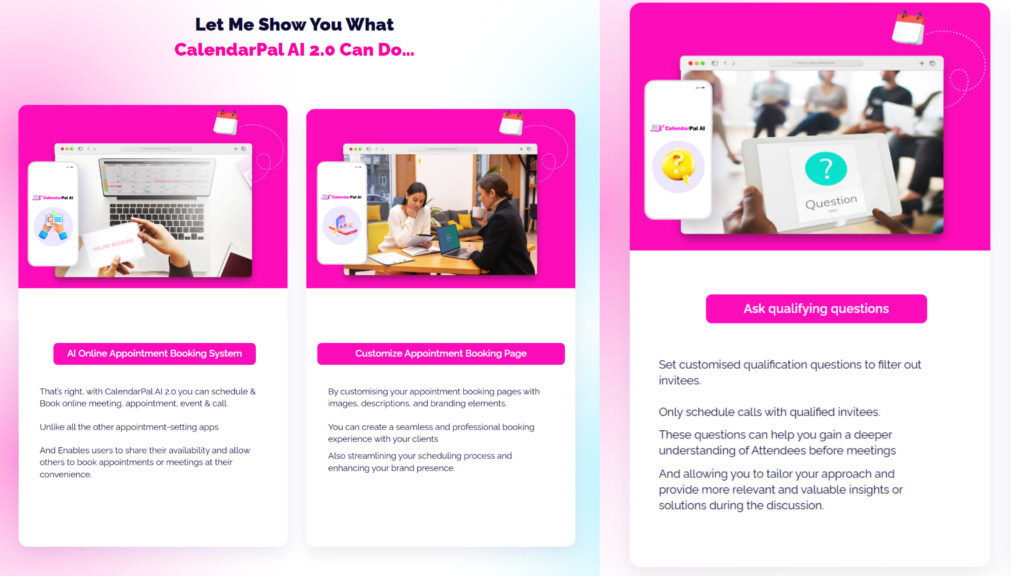
When analyzing any tool that calls itself the best appointment booking app, you can’t rely on marketing claims. You have to look at what the product actually delivers in terms of functionality, usability, and reliability. The platform offers features like customizable booking pages, AI-based lead qualification, automated reminders, built-in calendar integrations, and the ability to embed scheduling forms on any website. These are undeniably useful, but none of them automatically make it the best appointment booking app unless they’re implemented cleanly and consistently.
A proper review should look at how smoothly these features work. For instance, does the AI truly help filter leads or is it just a glorified questionnaire? Does the system handle time zones correctly? Do video and audio meetings run without lag? A lot of tools promise automation but fail in practice because their backend is weak, slow, or poorly optimized. A product claiming to be the best appointment booking app must not only offer features, but deliver them at a standard that’s competitive with industry leaders like Calendly, Acuity, and Setmore.
This section should dig into each core function with a critical eye: scheduling, automation, integrations, notifications, user experience, and customization. The goal is simple — to determine whether the product performs well enough to justify being considered an actual upgrade rather than just another launch-heavy tool with nice marketing and average execution.


Step-by-Step Operational Process
Keyword target: appointment booking app (3×)
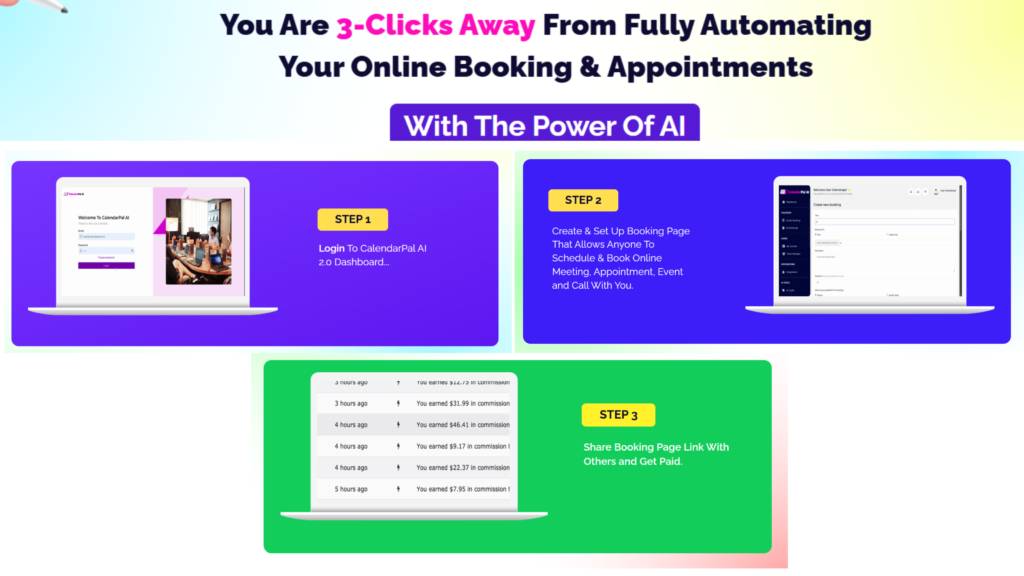
Understanding how the appointment booking app operates is essential before users commit to it. The setup generally starts with creating an account, entering business details, and customizing your booking page. Most platforms keep the onboarding process simple, but the real test is whether the appointment booking app allows users to configure everything without confusion or unnecessary steps. If users end up lost in a crowded interface, the tool fails its primary job — simplifying scheduling.
Once the booking page is ready, users can define availability, appointment types, durations, and buffer times. The platform claims to automate reminders and follow-ups, which can be useful if executed reliably. A strong appointment booking app should deliver notifications instantly, sync accurately with external calendars, and prevent double bookings.
The booking flow typically involves sharing a link with clients or embedding a form on a website. Clients select a time slot, answer qualification questions, and receive confirmation emails or SMS alerts. Ideally, the tool handles everything without requiring the user to micromanage settings. The key is efficiency — the system should save time, not add complexity.
In this section, you should break down the entire workflow: onboarding, setup, customization, sharing, booking, reminders, and integrations. Readers should clearly understand what the experience looks like from both the user’s and the client’s perspective.
How Does It Work?
To understand how the calendar scheduling tool works, you need to look beneath the promotional claims and examine the actual mechanics that power it. At its core, the system acts as a centralized dashboard where users configure availability, appointment types, meeting links, and automations. A good calendar scheduling tool should simplify these tasks, not bury them under unnecessary steps or cluttered interfaces. The product claims to function through an AI-enhanced system, but users should verify whether the “AI” is real or simply a marketing phrase used to describe standard features.
In practice, a functional calendar scheduling tool handles scheduling logic: detecting conflicts, adjusting time zones, sending notifications, and syncing with external platforms such as Google Calendar or Zoom. This is where many tools break down — poor syncing causes missed meetings, double bookings, or confusion for both the user and their clients.
The workflow usually involves three components: input (your availability), processing (the tool managing schedules automatically), and output (appointments appearing on your calendar and triggering reminders). If these three parts work consistently, users get a smooth scheduling experience. If they don’t, the tool becomes a liability rather than an asset. This section helps readers understand the tool’s logic and determine whether it performs as promised.

Who Needs This Product?
Keyword target: free booking calendar (3×)
Not every business needs a free booking calendar, but the tool is useful for anyone who relies on appointments, consultations, or scheduled interactions. Freelancers, coaches, agencies, consultants, and service providers can all benefit from a system that automates booking and eliminates back-and-forth scheduling. A free booking calendar is also practical for solopreneurs who don’t want to invest in expensive tools but still need a streamlined way for clients to book meetings.
However, it’s important to be realistic: not everyone needs advanced automation, AI qualification, or embedded booking pages. Some users may get everything they need from a simple free booking calendar like Google Calendar or basic scheduling widgets. The key is evaluating your workflow. If your business involves frequent client calls, time-zone coordination, paid consultations, or team scheduling, then this product might genuinely improve efficiency.
On the other hand, if you rarely schedule meetings or operate in a simple workflow, a complex system may be unnecessary. This section helps readers self-evaluate their needs objectively instead of blindly buying into sales claims.
What Makes This System Worth Trying?
Deciding whether something is worth your time comes down to practicality, not promises. A tool claiming to be the best appointment booking app needs to prove its value through consistent performance, clean interface design, and genuine time-saving automation. If a platform streamlines scheduling, reduces back-and-forth communication, and helps avoid double bookings, then it has a real impact on daily workflow. But that alone doesn’t make it the best appointment booking app — it simply makes it functional.
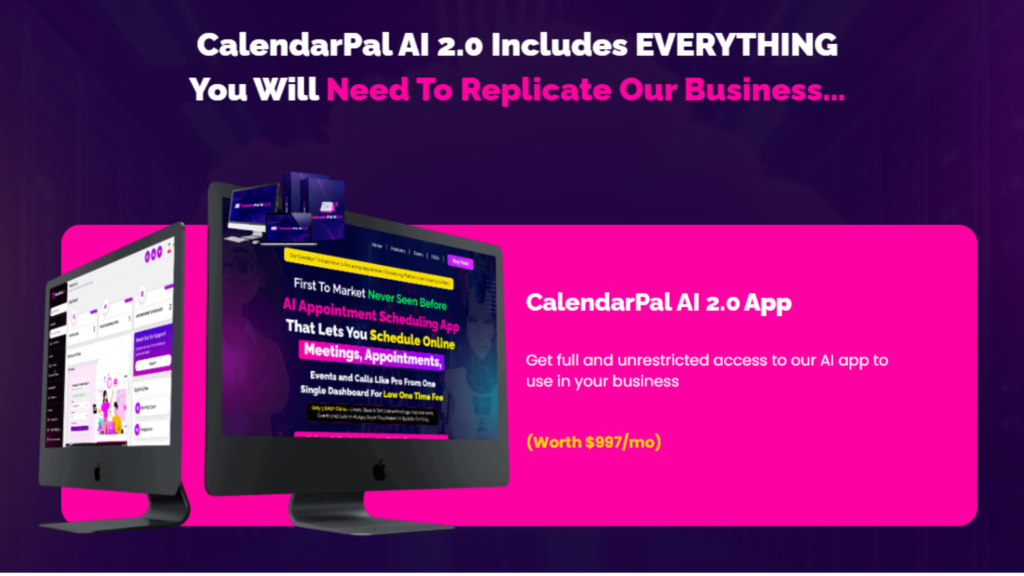
What may make this system worth trying is its combination of scheduling, reminders, branding options, and integrations in one dashboard. If these components work smoothly together, it can simplify business operations for freelancers, coaches, and consultants. That said, any system calling itself the best appointment booking app has to outperform industry leaders, not just meet basic expectations. Users should look at load speed, sync accuracy, meeting stability, and reliability of notifications before considering it a serious alternative.
Ultimately, whether the tool is worth trying depends on your needs. If you want a low-cost option for managing appointments without monthly fees, it may be worth exploring. If you depend heavily on flawless scheduling for business-critical operations, you should compare it with established platforms before switching.
How Much Does the Product Cost? (Including OTOs Details)
Price is one of the biggest decision factors, especially when a product positions itself as a more affordable alternative to every other free booking site or subscription-based tool. While it may advertise itself like a free booking site, it’s important to look past the marketing and check the actual costs: the front-end price, potential upsells (OTOs), and whether additional features require future upgrades. Some tools present a low entry fee but rely heavily on upsells to unlock essential features — something users need to watch for when comparing it to a typical free booking site.
You should also consider what value is included in the base package. If the core features — scheduling, integrations, reminders, and branding — only come with the main purchase, that’s fair. But if crucial components are locked behind higher OTOs, the “budget-friendly” positioning becomes misleading.
Refund policies matter too. A product may promise a strong money-back guarantee, but users should always verify how responsive support is before relying on it. This section will help readers understand the real investment required so they don’t get blindsided by unexpected upgrades later.
Why Should You Choose This Product?
Choosing the right appointment booking app comes down to evaluating whether it genuinely solves a problem for your business. If it reduces manual scheduling, prevents missed meetings, and helps manage bookings more efficiently, then it has legitimate value. However, you shouldn’t base your decision on bold promises or dramatic marketing — you should focus on whether this particular appointment booking app offers stability, usability, and customization that match your workflow.
This tool may appeal to users looking for a one-time payment model instead of recurring subscriptions, especially if they operate on tight budgets. For small businesses, coaches, or freelancers who simply need a practical appointment booking app, affordability can be a strong motivator. But affordability isn’t the only factor; consistency, customer support, and long-term maintenance matter just as much.
You should choose this product only if it fits your needs and performs well during real-world use. If you require advanced automations, enterprise integrations, or rock-solid reliability, you must compare it with established tools before committing. This section will guide readers through making a practical, informed choice.
Bonus Package – What’s Actually Valuable?
Many products in this space attempt to increase perceived value by stacking bonus courses, guides, or marketing materials. But when reviewing a calendar scheduling tool, the real question is: do the bonuses add practical value, or are they just filler content? A legitimate calendar scheduling tool should rely on its core features and performance, not bonuses, to justify its price.
Most bonuses offered — such as traffic guides, list-building ebooks, or video marketing tips — aren’t directly related to scheduling software. They may benefit beginners, but they don’t improve the functionality of the actual calendar scheduling tool. Users should evaluate bonuses realistically: helpful extras are fine, but they shouldn’t distract from the tool’s actual performance.
The only bonus that may have meaningful value is a commercial license, which allows users to offer scheduling services to clients. This can be useful if someone wants to build a side service or integrate scheduling into client projects. Still, the main product must hold its own; bonuses should never compensate for weak functionality or unreliable performance.
Pros and Cons
Every tool — even one claiming to be the best appointment booking app — comes with strengths and weaknesses. A balanced review requires acknowledging both. On the positive side, the platform offers multiple features in one place: scheduling, reminders, automation, and integrations. For users who want simplicity or are tired of paying recurring fees, this product may feel appealing. A one-time cost is attractive, especially if you’re comparing it with subscription-heavy competitors that label themselves the best appointment booking app in the market.
However, the downside is equally important. The user interface, performance consistency, integration reliability, and long-term support matter more than marketing claims. A platform can call itself the best appointment booking app, but if it fails to sync calendars properly or sends delayed notifications, it becomes a liability. Another concern is that heavy reliance on bonuses, hype, and emotional storytelling often indicates that the core product might not stand strongly on its own.
Users should weigh whether the strengths outweigh the weaknesses in their specific situation. If you need a low-cost solution with basic functionality, it might work. If you depend on flawless reliability for client-facing operations, you may want to compare this tool with established alternatives before committing.
Conclusion
A solid conclusion should cut through the noise and assess whether this product performs well enough to be a practical alternative to any free booking calendar or paid tool. While the platform presents a broad set of features — scheduling, reminders, custom branding, and integrations — users should remember that these features aren’t unique. Many tools, including simple free booking calendar platforms, offer similar functionality without hype or exaggerated claims.
The real value lies in execution: stability, ease of use, customer support, and ongoing updates. If the system runs smoothly and the developers actually maintain it long-term, it could be a reasonable choice for freelancers, coaches, and small businesses. However, if performance or support turns out to be inconsistent, even a basic free booking calendar might serve users better.
Ultimately, the conclusion is simple: the tool might be worth testing if you want a low-cost option, but don’t expect magic or overnight success. Scheduling software is supposed to save time, not promise income. Use this section of your article to guide readers toward making a grounded, evidence-based decision instead of falling for emotional marketing.
Additional Considerations Before Purchasing
Before choosing any appointment booking app, readers should think through a few practical factors. First, consider long-term dependability. Many new tools launch loudly but disappear after a few months, leaving users without updates or support. A stable appointment booking app should have consistent maintenance, active customer service, and a track record beyond hype-driven product launches. Next, consider how this tool fits into your existing workflow. If it complicates rather than simplifies your scheduling process, it’s not worth adopting, no matter how attractive the price appears.
Users should also compare this appointment booking app with established platforms to understand what’s missing. Industry leaders often provide deeper integrations, smoother interfaces, and proven reliability. While this product might offer a wide range of features, quality matters more than quantity. Encouraging readers to test the system with a few internal appointments before rolling it out to clients is a responsible recommendation.
Final Thoughts Before You Decide
Making a decision about any calendar scheduling tool should never be based solely on attention-grabbing marketing, emotional stories, or flashy bonuses. What matters is whether the platform genuinely solves a problem and fits smoothly into your workflow. When evaluating this product, compare its real performance — not the pitch — with what established competitors offer. A solid calendar scheduling tool should help you manage availability, organize appointments, send reliable reminders, and integrate with your existing digital setup without causing friction or confusion.
Before committing, ask yourself whether this system aligns with your needs. If your priority is avoiding monthly fees and you want a basic scheduling system with customizable pages and simple automation, this tool could be worth exploring. But if your business depends on rock-solid reliability, deep integrations, or long-term stability, you should examine carefully whether this calendar scheduling tool has the proven track record to justify replacing established solutions.
Another point to consider is long-term sustainability. New online tools often launch with aggressive pricing but may or may not receive ongoing updates or real support. A great deal today isn’t valuable if the tool becomes unsupported six months later. The smart move is to test it with a realistic mindset: expect functionality, not miracles. Let your needs determine your choice, not the pressure tactics of any sales page.
Use your judgment, weigh the pros and cons, and choose software that genuinely improves your workflow instead of adding another layer of complexity.
Frequently Asked Questions
Q1. Do I need experience to use this appointment booking app?
No, you don’t need any previous experience. The setup is simple and the dashboard is designed for beginners.
Q2. Can this tool replace my current calendar scheduling tool?
Yes, it can replace basic tools if you only need online bookings, reminders and simple integrations. For complex workflows, compare both before switching.
Q3. Does it sync with Google Calendar and other calendars?
Yes, it supports standard calendar syncing, including Google Calendar. You should still test it with your own schedule to confirm reliability.
Q4. Is this a one-time payment or a monthly fee?
The main offer is a one-time payment. Any future upgrades or add-ons may have separate pricing depending on the vendor.
Q5. Do I need extra software to make this free booking calendar work?
No. It works on its own for appointments, bookings and reminders. External tools like payment processors or video meeting apps are optional.
Q6. How fast can I start using this free booking site?
You can usually start within minutes. Create your booking page, set your availability and share the link.
Q7. What if this best appointment booking app doesn’t work for me?
You can request a refund within the stated guarantee period, as long as you follow the vendor’s refund policy and conditions.
Hashtags
#appointmentbooking
#bookingsoftware
#schedulingtool
#onlinecalendar
#calendarapp
#businessautomation
#smallbusinesstools
#productivityapps
#digitalbusiness
#entrepreneertools
#coachingsoftware
#consultingtools
#freelancertools
#saastools
#onlinescheduling
#smartbooking
#meetingscheduler
#automatedbooking
#appointmentsoftware
#bookingmanagement
#workflowautomation
#clientbooking
#bookingplatform
#calendarintegration
#worksmarterapps
#businessproductivity
#remindertools
#serviceproviderapps
#virtualmeetings
#onlineappointments
Pingback: Traffic Tool Review 2025: Powerful System That Boosts Result